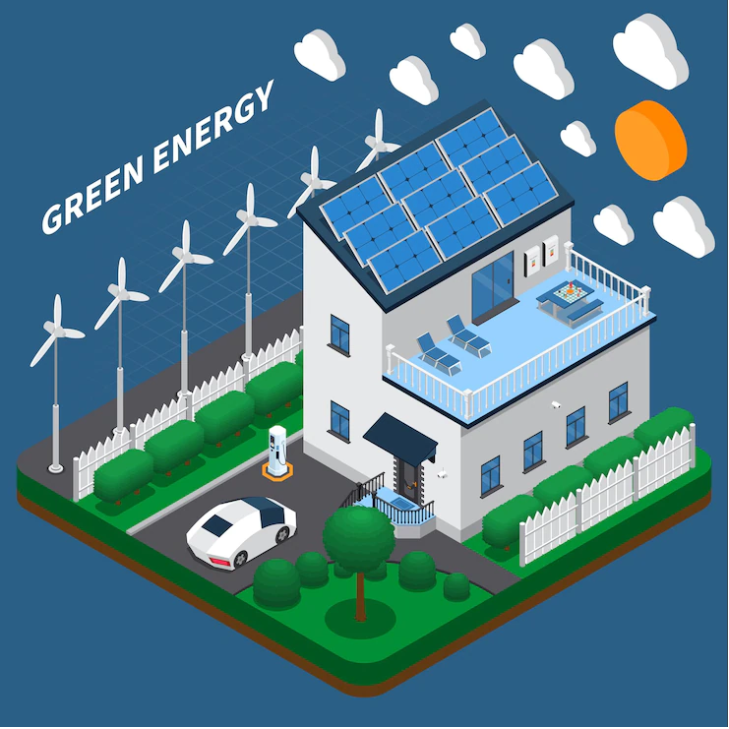
How solar panels work? The current day people are blown by the global warming issue. Most of them takes action by performing renewable energy. Although, so many kinds of renewable energy, the most eligible system is solar panels. In this article, we will learn how solar panels work.
The use of solar power to generate electricity can reduce the waste and pollution issue that can imply to our drinkable water quality.
Contents
What is solar energy?
Before we come up to the idea how solar panels work, The photons that reach your solar cells and form an electric current come from someplace – the sun. Solar energy is produced by the continual nuclear fusion processes that occur deep within the sun. Nuclear fusion occurs in the sun when protons (which are essentially the same as hydrogen atoms) collide and fuse at intense temperature and pressure to produce helium. This process produces a vast quantity of energy (along with extra protons), and it occurs continually in the core of the sun, creating about 500 million tonnes of hydrogen atoms per second.
What was the outcome? Our sun is almost seven million degrees Fahrenheit and continually emits tremendous quantities of energy in the form of electromagnetic radiation (EMR).
The science of how solar panels work: solar cells and the photovoltaic effect
In a nutshell, a solar panel generates electricity when photons, or particles of sunshine, knock electrons loose from atoms, causing them to move. This flow of electrons is known as electricity, and solar panels are intended to absorb it and convert it into useful electric current. The photovoltaic effect is the fundamental chemical and physical mechanism behind the great majority of solar technology.
The photovoltaic effect is at the heart of the science of generating power with solar panels. The photovoltaic effect, discovered by Edmond Becquerel in 1839, is a property of some materials (known as semiconductors) that allows them to create an electric current when exposed to sunshine.
The photovoltaic effect operates in the following steps:
- Sunlight strikes the solar cells, activating electrons and setting them in motion.
- An electrical current is created when electrons flow out of the junction between cell layers.
- Metal plates and wires capture electron flow and create electricity.
The process of generating solar power begins with solar cells, which are the individual components of a larger solar panel. Solar cells are typically built of silicon (atomic number 14 on the periodic table). Silicon is a nonmetal semiconductor that can absorb and convert sunlight into energy; silicon is also used in nearly every computer on the globe. There are several kinds of semiconductors often used in solar cells, with silicon being by far the most prevalent, accounting for 95 percent of all solar cells made today. The two major semiconductor materials utilised in thin-film solar panel manufacture are cadmium-telluride and copper indium gallium diselenide.
In photovoltaic cells, two layers of silicon are utilised, and each one is carefully processed, or “doped,” to generate an electric field at the junction between the layers. This electric field causes free electrons to flow through the solar cell and out of the silicon junction, resulting in the generation of an electrical current. To form the positive and negative sides of a solar cell, phosphorus and boron are usually utilised as positive and negative doping agents, respectively.
Solar cell alternatives to silicon
While silicon is the most frequent semiconductor used in solar panels throughout the world, there are other choices employed in certain new and upcoming solar goods.

Thin-film solar cells are a type of solar cell that is comprised of lightweight and/or flexible materials. Thin-film solar cells are classified into four chemical types: Cadmium Telluride (CdTe), Amorphous Silicon (a-Si), Copper Indium Gallium Selenide (CIGS), and Gallium Arsenide (GaAs). The light-absorbing layers in these cells are 350 times smaller than those in silicon cells, thus the term “thin-film.”
Organic solar cells are a subset of thin-film solar cells that employ carbon-based materials as a semiconductor. These organic photovoltaics (OPV) are made by dissolving organic chemicals in ink and printing them onto thin polymers. They are also known as “plastic solar cells” or “polymer solar cells.”
Perovskite solar cells are a type of thin-film solar cell that is formed of perovskites, which are man-made materials having a unique crystallographic structure that allows them to convert photons of light into useful power. Perovskite cells are created using “solution processing,” the same method used to print newspapers.
Other important solar panel components
Aside from the solar cells, a typical solar module has the following components:
The glass casing of the panels provides durability and protection for the silicon PV cells. Solar panels contain an insulating layer and a back sheet behind the glass exterior to guard against heat dissipation and humidity inside the panel. This insulation is critical since temperature rises reduce efficiency, resulting in reduced solar panel performance. Solar panels include an anti-reflective coating that enhances sunlight absorption and exposes the cells to the greatest amount of sunlight.
When it comes to silicon solar cells, there are two cell shapes that are often used: monocrystalline and polycrystalline. Monocrystalline cells are composed of a single silicon crystal, whereas polycrystalline cells are composed of silicon pieces. Monocrystalline formats allow for greater electron movement and hence give a better efficiency solar technology than polycrystalline formats, albeit they are often more costly.
If you need further insight how solar panels work, could you find it in the video below.
What is the process through which solar panels create power for your home? Explanation in detail
The initial phase in a solar panel’s operation is to generate an electric current, however the process does not finish there. The following is how solar panels systems create useful power for your home:
- Photovoltaic cells absorb solar energy and convert it to direct current electricity.
As previously stated, the solar cells that comprise each solar panel perform the majority of the hard lifting when it comes to generating power. Your solar panels generate an electrical current due to the photovoltaic effect. - Solar inverters convert direct current (DC) power from your solar modules to alternating current (AC), which is utilised by most home appliances.
When DC power travels through your solar inverter, it is transformed to AC electricity. Transformers that regulate the voltage of DC and AC can also be installed in inverters. - Electricity runs through your house, supplying power to technological equipment.
Solar inverters deliver the converted alternating current energy to your home’s electrical panel. From there, power is sent throughout your home to all of your outlets, ensuring that when you plug in your equipment, there is a useful electric current accessible. - Excess electricity generated by solar panels is fed into the power grid.
If you have a grid-connected solar system, electricity may flow both to and from the power grid, and surplus energy generated by your panels can actually make you money. Net metering is a regulation that allows you to obtain credits from the power grid when you transmit electricity back to it, lowering your overall electricity costs. Learn more about the policy of net metering.