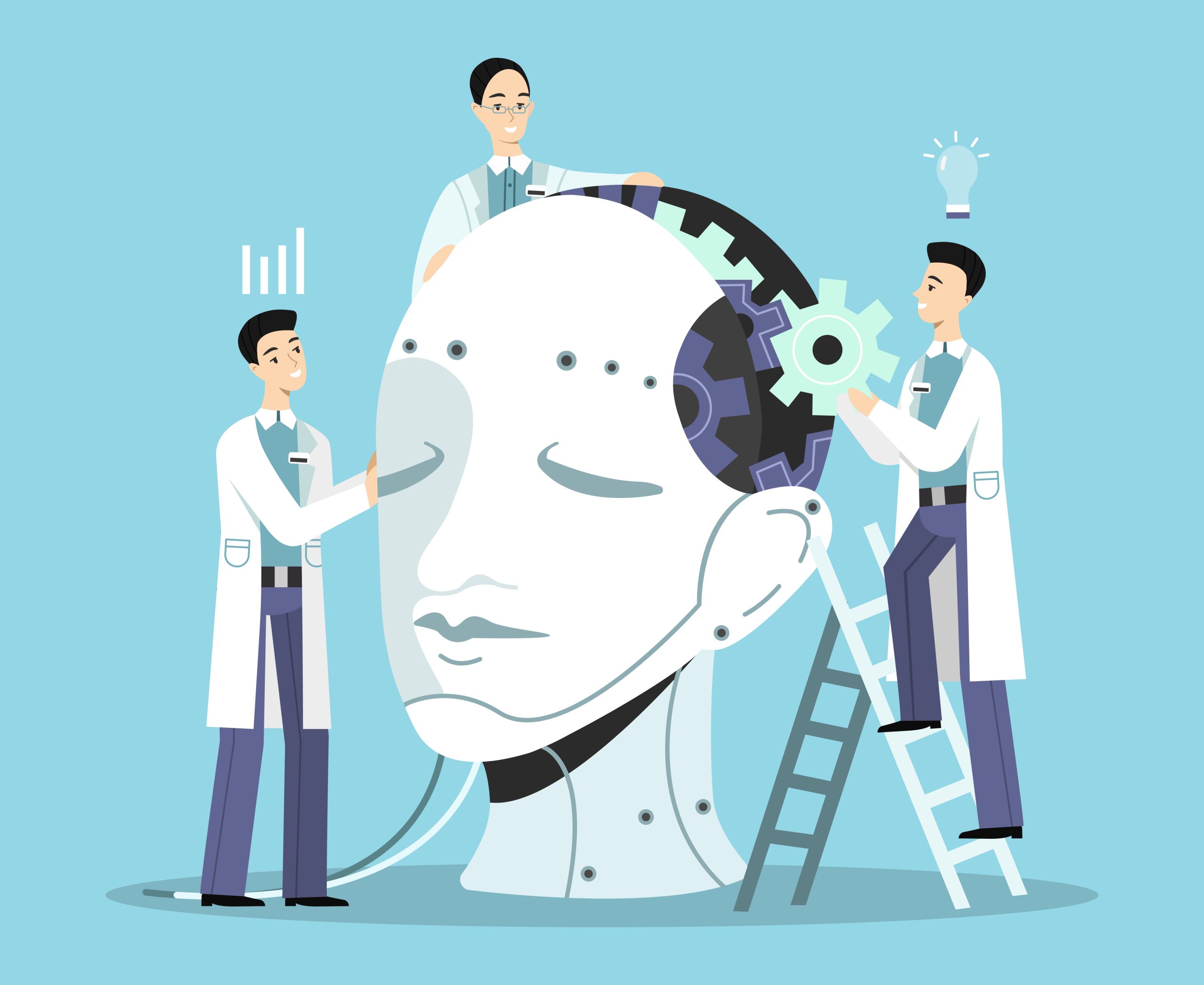
The term artificial intelligence, AI impact on jobs has recently emerged as a popular topic of conversation in the fields of technology and innovation. There is a growing concern that advances in artificial intelligence technologies will have an impact on the job market and employment opportunities in the future. In this article, we will examine the influence that AI has had and will continue to have on the labor market and employment opportunities.
Find here the history and evolution of AI.
Artificial intelligence (AI) is a subfield of computer science that focuses on the creation of intelligent machines that can carry out tasks that would normally require the intelligence of a human. It is widely used in various industries such as healthcare, finance, transportation, and manufacturing. The application of AI has resulted in increased productivity, efficiency, and accuracy, which has fundamentally altered the way in which we perform our jobs.
The potential effect that artificial intelligence will have on employment is one of the primary sources of concern regarding this technology. There is a consensus among industry professionals that human jobs will be lost as a direct result of the rise of AI. However, this is not entirely true. Although AI will make some jobs obsolete, it will also open up a number of new employment opportunities. The World Economic Forum forecasts that by the year 2022, artificial intelligence will be responsible for the creation of 58 million additional job opportunities.
The rise of AI will open up job opportunities in a variety of fields. The creation and upkeep of AI systems constitutes one of the areas in which AI is expected to generate employment opportunities. Programmers, data scientists, and machine learning specialists are needed to develop and maintain AI systems. These systems also need to be kept up to date. In addition, AI systems call for the involvement of people who can instruct and monitor the functioning of the systems. This will result in the creation of job opportunities for supervisors and trainers.
The medical field is another sector that stands to benefit from the employment opportunities presented by AI. AI has the potential to assist medical professionals in improving the accuracy and efficiency with which they diagnose and treat diseases. This will open up job opportunities for medical professionals who are able to collaborate with AI systems in the healthcare industry.
In the field of customer service, AI will also result in the creation of new job opportunities. Customers can get assistance with their questions from chatbots powered by AI, and they can also receive personalized recommendations. This will result in the creation of job opportunities for customer service representatives who can collaborate with chatbots powered by AI.
However, AI will also make some jobs obsolete by automating them. AI has the potential to automate dangerous jobs as well as those that involve performing repetitive tasks. This will result in a loss of jobs in a number of different industries. For instance, self-driving cars have the potential to replace drivers, and automated factories have the potential to replace workers on assembly lines.
It is important to upskill and reskill the workforce in order to mitigate the effects of artificial intelligence on job losses. In order to prepare workers for the era of artificial intelligence, they will need to acquire new skills. Programming, data analysis, and machine learning are all examples of skills that can be taught to workers.
Introduction AI impact on jobs
The field of artificial intelligence, also known as AI, is one that is rapidly expanding and focuses on the creation of intelligent machines that are able to carry out tasks that would normally require the intelligence of humans. AI is currently being utilized in a variety of fields, including the healthcare sector, the financial sector, the transportation sector, and the manufacturing sector. But there is a growing concern that AI will have an impact on the job market and employment opportunities in the future. In this article, we will delve into the impact that AI has had and will have on the labor market as well as the opportunities for employment.

The AI and the Job Market
The application of AI in the workplace has resulted in increased productivity, efficiency, and accuracy, which has fundamentally altered the way in which we perform our jobs. However, growing concerns about the loss of jobs are one of the side effects of increased use of AI. Artificial intelligence is expected to displace human workers, which will result in a loss of employment opportunities. Although AI will make some jobs obsolete, it will also open up a number of new employment opportunities.
The World Economic Forum forecasts that by the year 2022, artificial intelligence will be responsible for the creation of 58 million additional job opportunities. In addition, the report suggests that artificial intelligence will eliminate 75 million jobs, resulting in a gain of 23 million jobs overall. The skill sets required for the jobs that will be created will be distinct from those needed for the jobs that will be eliminated. Because of this, it is absolutely necessary for workers to receive training in the new skills that will be required in the era of AI.
The Rise of AI and Its Impact on Employment
The rise of AI will open up job opportunities in a variety of fields. The creation and upkeep of AI systems constitutes one of the areas in which AI is expected to generate employment opportunities. Programmers, data scientists, and machine learning specialists are needed to develop and maintain AI systems. These systems also need to be kept up to date. In addition, AI systems call for the involvement of people who can instruct and monitor the functioning of the systems. This will result in the creation of job opportunities for supervisors and trainers.
The medical field is another sector that stands to benefit from the employment opportunities presented by AI. AI has the potential to assist medical professionals in improving the accuracy and efficiency with which they diagnose and treat diseases. This will open up job opportunities for medical professionals who are able to collaborate with AI systems in the healthcare industry. For instance, radiologists are able to identify abnormalities in medical images with the assistance of image recognition systems powered by AI. Both the accuracy of diagnoses and the amount of work that radiologists need to do will improve as a result of this.
In the field of customer service, AI will also result in the creation of new job opportunities. Customers can get assistance with their questions from chatbots powered by AI, and they can also receive personalized recommendations. This will result in the creation of job opportunities for customer service representatives who can collaborate with chatbots powered by AI. For instance, customer service representatives can supervise chatbots in order to better assist customers with more complicated questions.
The Relationship Between AI and Job Loss
While artificial intelligence will result in the creation of new job opportunities, it will also result in the automation of some jobs. AI has the potential to automate dangerous jobs as well as those that involve performing repetitive tasks. This will result in a loss of jobs in a number of different industries. For instance, self-driving cars have the potential to replace drivers, and automated factories have the potential to replace workers on assembly lines.
It is essential to upskill and reskill the workforce in order to mitigate the effects of artificial intelligence on job losses. In order to prepare workers for the era of artificial intelligence, they will need to acquire new skills. Programming, data analysis, and machine learning are all examples of skills that can be taught to workers. Workers will be able to take advantage of the newly created job opportunities brought about by AI and adapt to the rapidly shifting labor market as a result of this.
The Role of AI in Education
The educational system will also be influenced by AI. Students may be able to learn more quickly and thoroughly with the assistance of AI if it is implemented in educational settings. AI has the potential to personalize the educational experience for each student by catering to their unique learning preferences and allowing them to progress at their own pace. This will lower the amount of work that teachers have to do while simultaneously raising the bar for educational excellence.
In addition, AI can help instructors with grading assignments and providing feedback on students’ work. This will cut down on the amount of time that teachers have to spend grading, which will allow them more time to focus on other aspects of teaching, such as engaging students and planning lessons.
The Role of AI in Entrepreneurship
There will also be an effect of AI on entrepreneurial activity. The application of AI can be of assistance to business owners in the process of developing original products and services. AI can be utilized to analyze customer data and make accurate predictions regarding customer behavior.
This can be of assistance to business owners in the development of goods and services that more effectively satisfy the requirements of their clientele. Additionally, artificial intelligence can assist business owners in automating specific aspects of their operations, such as customer service and inventory management, which can save them time and money. The ability to concentrate on other aspects of their businesses, such as growth and innovation, will be made possible as a result of this.
Conclusion
The ways in which we work, learn, and live are all being revolutionized by AI. While artificial intelligence will lead to the creation of new job opportunities overall, it will also cause job losses in certain fields. It is essential to upskill and reskill the workforce in order to mitigate the effects of artificial intelligence on job losses.
In order to prepare workers for the era of artificial intelligence, they will need to acquire new skills. In addition, artificial intelligence will have an effect on the educational system, business, and a variety of other aspects of our lives. As a result, it is essential to make adjustments to the shifting job market and take advantage of the opportunities that artificial intelligence (AI) presents. We have the ability to improve our collective future by maximizing the potential of AI through strategic education, preparation, and application of its capabilities.
Here are some of the top skills to learn for jobseekers:
- Digital literacy: With the increasing digitization of various industries, it is essential for jobseekers to have a basic understanding of digital tools and technologies such as social media, cloud computing, and data analytics.
- Communication: Strong communication skills are essential in almost every job, as it enables individuals to effectively convey ideas and collaborate with others.
- Critical thinking: The ability to analyze and evaluate information to make decisions and solve problems is a valuable skill that is sought after by employers.
- Adaptability: In today’s rapidly changing job market, the ability to adapt to new situations and learn new skills quickly is essential.
- Leadership: The ability to lead and motivate teams is a valuable skill that is sought after by employers across various industries.
- Project management: The ability to manage projects and ensure that they are completed on time and within budget is a valuable skill that is in high demand.
- Creativity: The ability to think creatively and come up with innovative solutions to problems is a valuable skill that is sought after by employers in industries such as advertising, marketing, and design.
- Programming: With the increasing importance of technology in various industries, knowledge of programming languages such as Python, Java, and C++ can open up many job opportunities.
- Data analysis: The ability to analyze and interpret data is a valuable skill that is in high demand in industries such as finance, healthcare, and marketing.
- Emotional intelligence: The ability to understand and manage one’s emotions and the emotions of others is a valuable skill that is sought after by employers in industries such as human resources, management, and customer service.
These are just a few of the many skills that are in high demand among employers. Jobseekers can also consider industry-specific skills and certifications that can help them stand out in their field. Additionally, continuous learning and upskilling can help jobseekers stay competitive in the job market and adapt to the changing demands of the industry.
The impact of AI on the job market and employment opportunities is significant, and it requires employees to adapt and develop new skills to remain competitive in the workforce. Here are some ways that employees can adapt to the impact of AI:
- Embrace lifelong learning: With the increasing automation of various tasks, it is essential for employees to continuously learn and upskill to remain relevant in the job market. This involves taking courses, attending workshops, and obtaining certifications to develop new skills and stay up-to-date with the latest industry trends.
- Focus on uniquely human skills: While AI can perform many tasks efficiently, it is still limited in its ability to replicate human skills such as creativity, emotional intelligence, and critical thinking. Therefore, employees should focus on developing these skills to remain valuable in the workforce.
- Be open to change: With the increasing adoption of AI in various industries, it is essential for employees to be open to change and adapt to new technologies and work processes. This involves being flexible and willing to learn new skills and technologies.
- Collaborate with AI: Rather than seeing AI as a threat, employees can collaborate with AI to enhance their job performance. This involves understanding how AI works and leveraging it to augment their work, such as using AI-powered tools to automate repetitive tasks and free up time for more complex work.
- Consider transitioning to new roles: With the increasing automation of various jobs, some roles may become redundant, while new roles emerge that require a combination of technical and soft skills. Therefore, employees should consider transitioning to new roles that align with their skills and interests and provide opportunities for growth and development.
In summary, employees can adapt to the impact of AI by embracing lifelong learning, focusing on uniquely human skills, being open to change, collaborating with AI, and considering transitioning to new roles. By doing so, employees can remain competitive in the job market and take advantage of the opportunities that arise with the increasing adoption of AI.
Here are some soft skills worth learning as you enter an AI-driven industry:
- Critical thinking: Employees should be able to analyze information and make informed decisions based on data. They should be able to identify patterns and connections in data to gain insights.
- Communication: Good communication skills are essential for employees to collaborate effectively with colleagues, explain complex technical concepts to non-technical stakeholders, and persuade others to adopt new ideas.
- Creativity: As AI automates repetitive tasks, employees need to develop their creativity to tackle complex problems and come up with innovative solutions. They should be able to think outside the box and generate new ideas.
- Adaptability: As AI technologies continue to evolve, employees need to be adaptable and willing to learn new skills. They should be able to adapt to new technologies and work processes quickly.
- Emotional intelligence: Employees should be able to understand and manage their own emotions as well as those of others. This includes being empathetic, self-aware, and socially aware.
- Leadership: Employees should be able to lead and inspire others, particularly in the context of AI-driven teams. They should be able to set clear goals, communicate effectively, and build strong relationships with team members.
- Ethics: Employees should understand the ethical implications of using AI in their industry. They should be able to identify potential biases and ensure that AI systems are used ethically and responsibly.
There are many online courses available to develop these soft skills. Here are a few examples:
- Coursera’s “Critical Thinking Skills for University Success”: https://www.coursera.org/learn/critical-thinking-skills
- Udemy’s “Effective Communication Skills for Beginners”: https://www.udemy.com/course/effective-communication-skills-for-beginners/
- LinkedIn Learning’s “Creativity Bootcamp”: https://www.linkedin.com/learning/creativity-bootcamp/
- edX’s “Adaptability and Resilience”: https://www.edx.org/course/adaptability-and-resilience
- Coursera’s “Emotional Intelligence Specialization”: https://www.coursera.org/specializations/emotional-intelligence
- Coursera’s “Leading People and Teams”: https://www.coursera.org/learn/leading-teams
- edX’s “AI Ethics: Global Perspectives”: https://www.edx.org/course/ai-ethics-global-perspectives
These courses can help employees develop the soft skills they need to succeed in an AI-driven industry.